
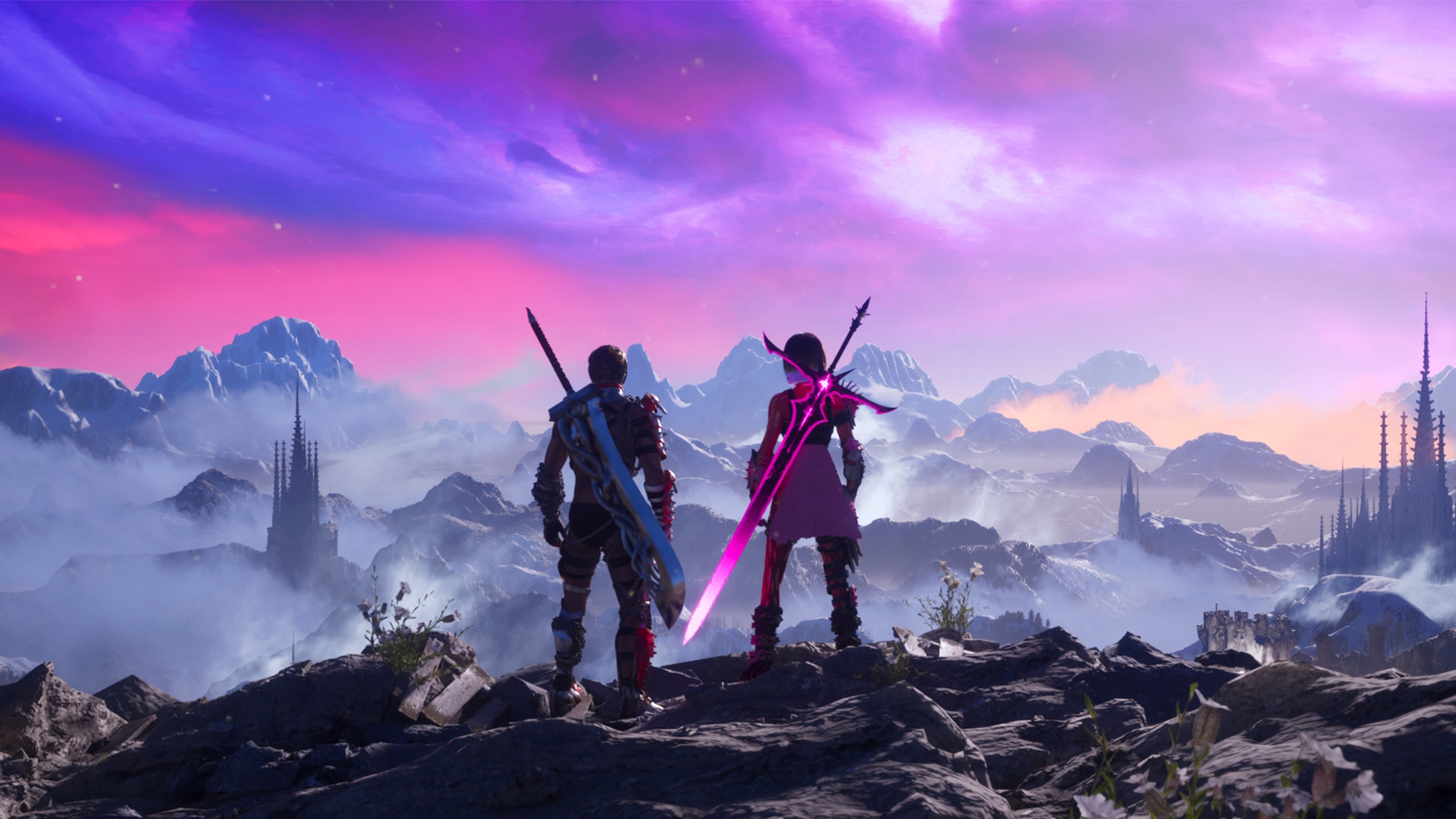

I’m about the biggest Steven Spielberg evangelist you’re going to find. His work, generally, has the kind of complexity and self-reflection we expect from our greatest filmmakers. Then there’s READY PLAYER ONE. It recasts the collapse of third spaces and a radically widening gap of income inequality as shit overcome with a Van Halen needle drop and a Delorean. It’s a film that knew the general shape of the dystopia we had arrived into, but refused to acknowledge that it was present. It meekly asserted that the total collapse of third space and increased income inequality would happen in the mid 2040s. This is rosy sentimentality. We’re there now.
When asked why he no longer set his fictions in worlds with unrealized technology and futuristic aesthetic, William Gibson replied, “We have no future, because our present is too volatile. We have only risk management. The spinning of the given moment’s scenarios.” Perhaps this is why new science fiction has begun to feel increasingly inauthentic, or, in the best of cases, like fantasy. Science fiction dwells entirely within our world now; the present is indistinguishable from the future now,because we no longer have the freedom to create a future.
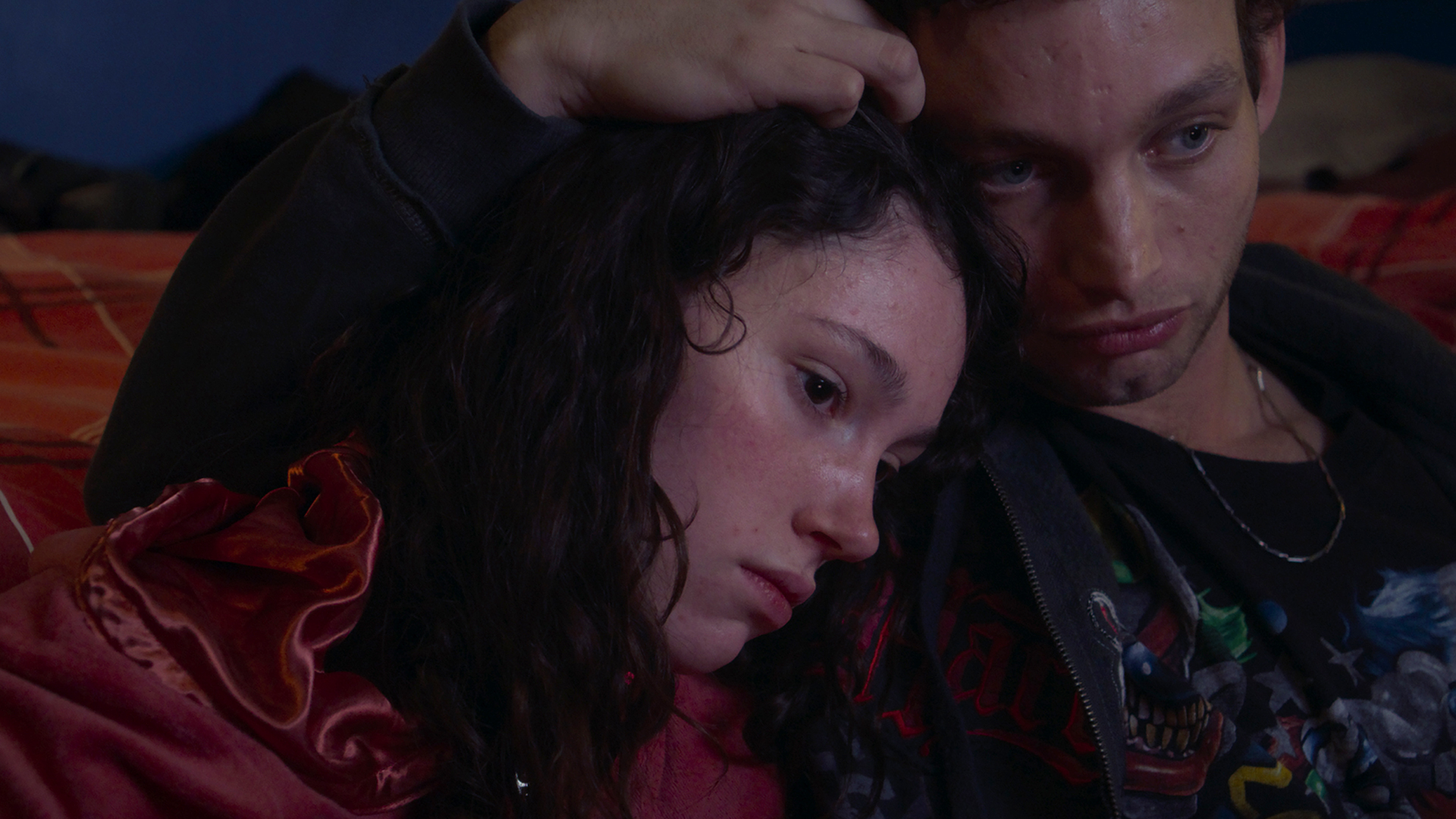
It’s why if I were creating a canon of what is the best science fiction now, it would be with work like RED ROOMS and A DIFFERENT MAN. These are films that feel like they exist in our horrible now. They need not wait for a future that will never arrive. Caroline Poggi and Jonathan Vinel’s EAT THE NIGHT belongs in the canon of the best science fiction. In a way that READY PLAYER ONE never did, it wrestles with the simultaneous collapse of food and housing security with the erosion of third spaces. As Poggi and Vinel see it, we no longer live in a society. Pablo (Theó Cholbi) and his sister Apolline (Lila Gueneau) are 18 and 17 years old, respectively, and have spent much of the last nine years playing MMORPG Darkmoon. In the first act of the film, the game developers push an announcement to users that the game will be shutting down on the Winter Solstice.
The film makes clear that this game is how the siblings relate to one another and themselves. Unlike focusing on moments of euphoric action, the filmmakers dwell in the modern reality of the online game for many people, especially those in the Zoomer generation. With restaurants, bars, retail, theater, and other diversions closing or financially out of reach, this is the gathering place. A MMORPG is both replacing a night out the bar and an evening bridge game or knitting circle.
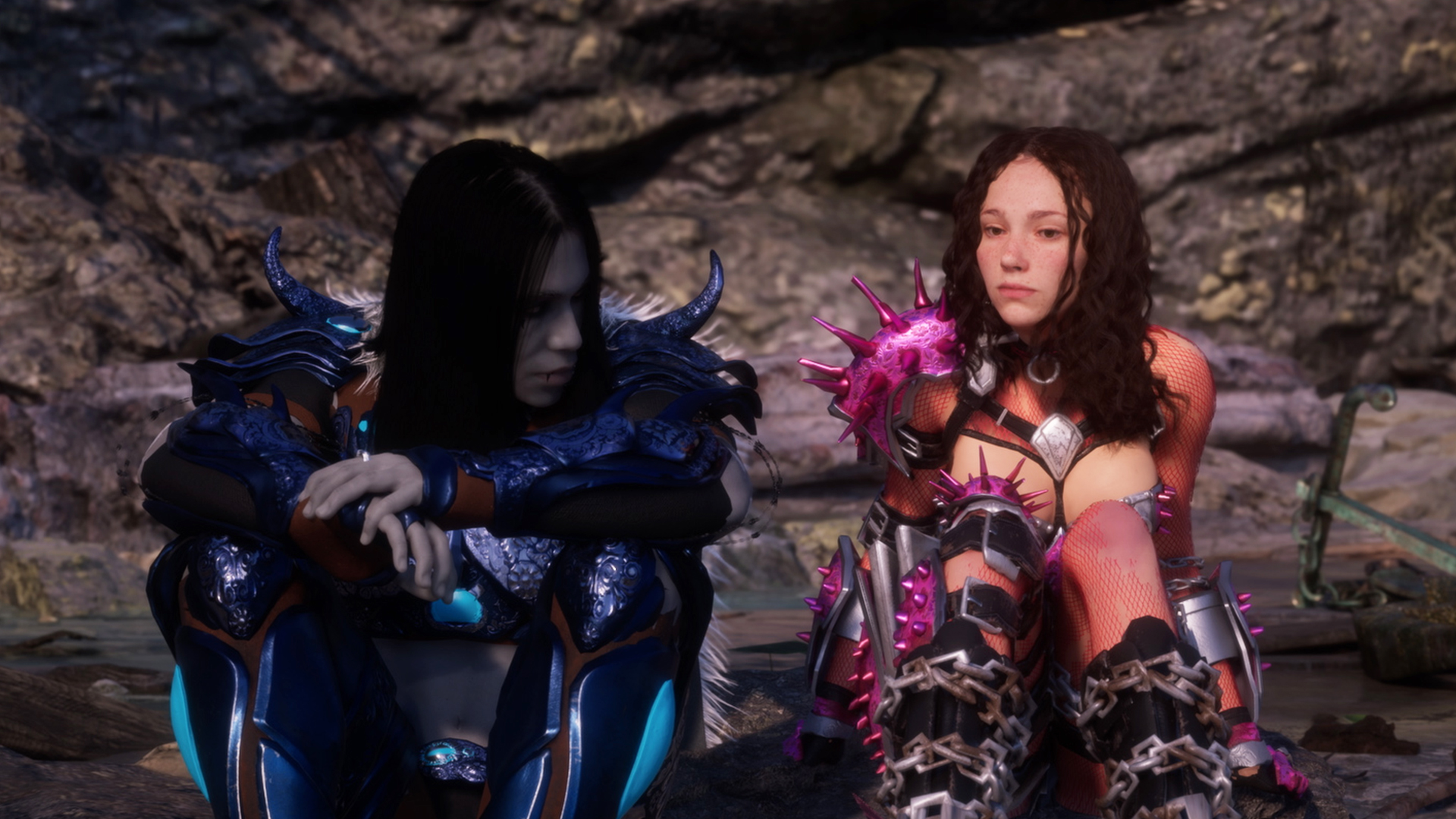
We are treated to quiet scenes of Pablo and Apo simply sitting in the quiet of the game. The lure is immediately apparent. So many of our digital spaces are so hyper-targeted and demanding of constant engagement that to simply be still in an explicitly shared space is a radically different experience than dopamine-hunting on Twitter or Instagram. Those are solitary practices. Even if one trades comments with another, the experience is ultimately asynchronous. Messages in bottles ferried back and forth faster than the speed of light are still messages in bottles. On Twitter, TikTok, and Instagram, we are alone. In Fortnite, Final Fantasy XIV, or EAT THE NIGHT’s Darkmoon, we are together. We’re beneath the same sky even if ephemeral.
Upon hearing of the shutdown, Apo and Pablo react differently. Apo retreats further into Darkmoon. It’s as if she’s trying to stockpile memories for the end of the world. It makes sense: Apo is 17 and has been playing the game for literally half her life. The only landscape she’s ever found comfort and security in will disappear and can never be visited again. Viewers older than a Zoomer think about the places around the edges of memory of your youth. The Mexican restaurant my family would go in my youth not only no longer exists, but the building was torn down. My family no longer lives in the house I grew up in, and the tree and swing that stood in the front yard are gone. Places are erased by the march of time, and with generations increasingly retreating to digital spaces, the capitalist motivations can collapse hundreds of beloved spaces in a moment. Apo’s crisis and her reaction ring true.
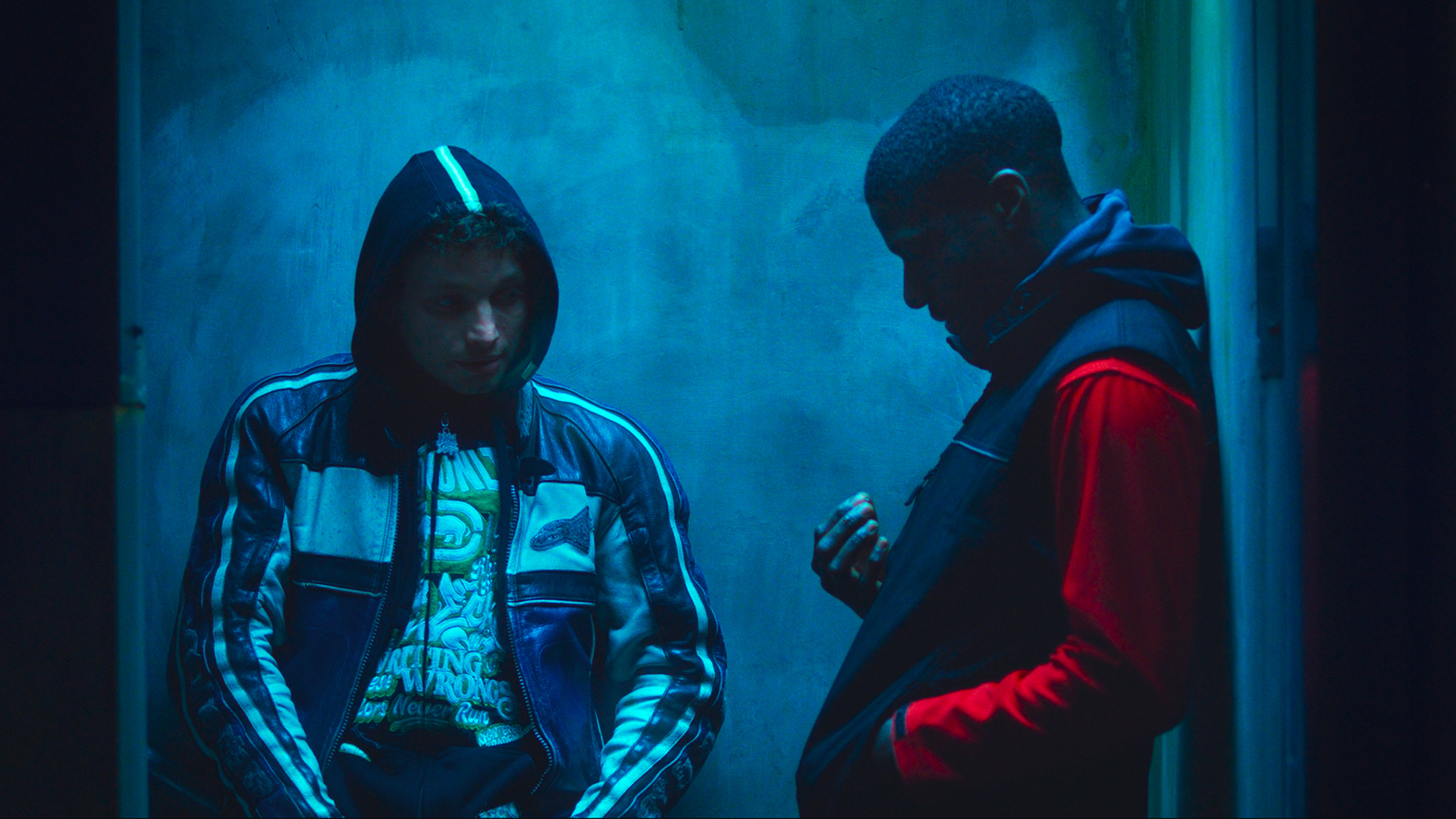
Pablo reacts by trying to push out into the world. Apo and Pablo live with a cruel, mostly absentee father, and have fended for themselves. Pablo has made ends meet by dealing drugs. In the wake of the Darkmoon announcement, he increases his efforts. As Pablo spreads his wings as a drug dealer, it, like Apo’s withdrawal into the game, makes sense. Mechanisms that offer financial security are rapidly vanishing for all people, but at an astonishing clip for the young. Selling more might provide Pablo more money, and money means options. When he pushes out, he meets Night (Erwan Kepoa Falé), and initially they get into business together. Rapidly, they become lovers. Their connection is intense, hungry, and desperate. EAT THE NIGHT underscores just how starved for connection and touch we all are. Pablo aches to be loved; he wants to lose himself to desire. The intensity and immediacy of these needs are a reflection of us no longer living in a society. Disconnected from each other, our needs become more powerful, and our ability to understand our reactions to stimuli crumbles.
This leads to Pablo’s problem. He runs afoul of a local drug dealing gang. When one hyper-stimulated 18-year-old angers a bunch of hyper-stimulated 18-year-olds who all feel like their backs are against the wall, the outcome will be tragic. Golding’s Lord of the Flies supposes what would happen to boys in the absence of society. Poggi and Vinel know we no longer need to go to a desolate island to tell that story.
Cinematographer Raphaël Vandenbussche uses a visual language for Pablo’s exploits dealing drugs that feels connected with video games. Shots of him pitched forward on a speeding motorcycle, or lunging at an opposing drug dealer with a taser, feel pulled from Grand Theft Auto or Yakuza, respectively. It’s those moments that feel like a mini-map and health bar would be at home on screen. It’s Darkmoon where peace and self-reflection dwells. The world is an increasingly violent game where no one senses any social contract with any other person.
After Pablo goes to jail on a 90-day sentence, Night begins to explore Darkmoon. He befriends the isolated Apo, and the third of the film’s key relationships unfolds. As Nour, Night is inquisitive, attentive, and kind. He shows interest in the world for a myriad of reasons. Exploring it brings him closer to his jailed lover, it gives him a chance to quietly look in on Apo in a way that wouldn’t overstep her boundaries, and he finds a quiet world that offers respite from the unvarnished cruelty around him in “the real world.”
I hate to keep harping on READY PLAYER ONE here, but the youth of the mid 2040s being fixated on the pop culture of the 1980s seems like generational self-aggrandizement. It is for the Boomers who made the culture and the Xers who experienced it. Even if we never arrive in the future, the world moves on. I guarantee to you that most eighteen-year-olds right now have never seen THE BREAKFAST CLUB and absolutely don’t give a shit about it.
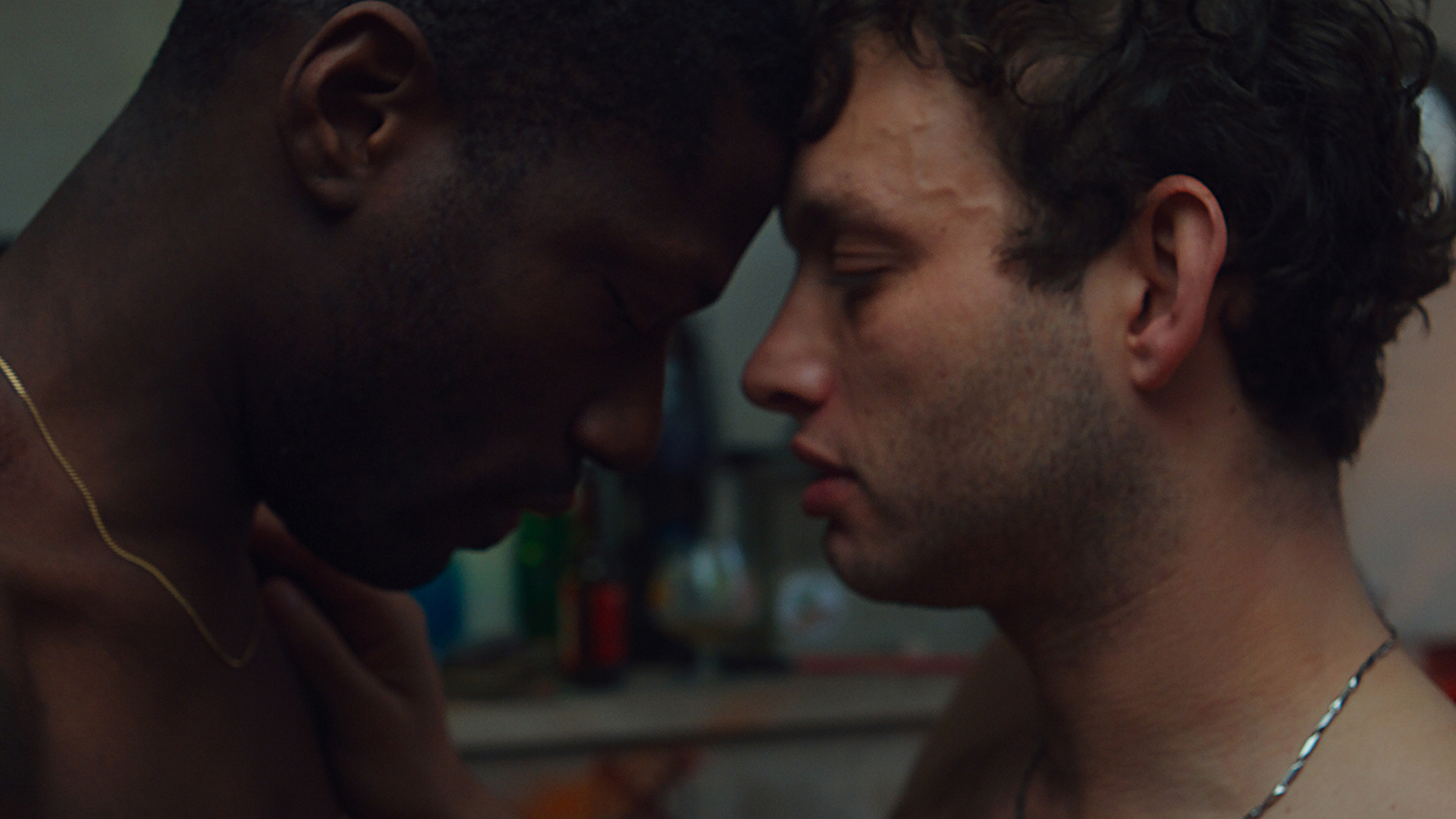
One of the things the beautiful EAT THE NIGHT helped me make peace with was that I’ll never see the future because we’ve run out of future. Dystopian science fiction that exists in futurist spaces is inherently sentimental because it says there is more runway ahead of us. Even if it might get as bad as BLADE RUNNER 2049 or READY PLAYER ONE, it could get better, because there’s runway there. You probably started to understand there is no future the first time you muttered the words, “We were promised flying cars.” The phrase requires an innate understanding that they’re no longer possible, and even if they did arrive, they don’t come coupled with the hope of a better world.
I can’t say EAT THE NIGHT is a future classic, for the reasons I’ve detailed, but I can say there’s no film closer to capturing this exact moment in time. EAT THE NIGHT is a perfect distillation of our current moment, with its waning beauty and growing isolation. This is a vital film, and in one of your quiet moments, I hope you’ll check it out.


them, not even once. When he’s not disappointing his cats he’s watching and writing about film.
His interests run toward naturalism, SOV and forgotten thrillers. Against his better judgment he
has hosted a podcast, Impossible Coin, for six years.
Tags: Agat Films, Atelier de Production, Caroline Poggi, Drama, Erwan Kepoa Falé, Ex Nihilo, France, Guillaume Bréaud, Jonathan Vinel, Lila Gueneau, Raphaël Vandenbussche, ssaliva, Théo Cholbi, Thriller, Vincent Tricon
No Comments